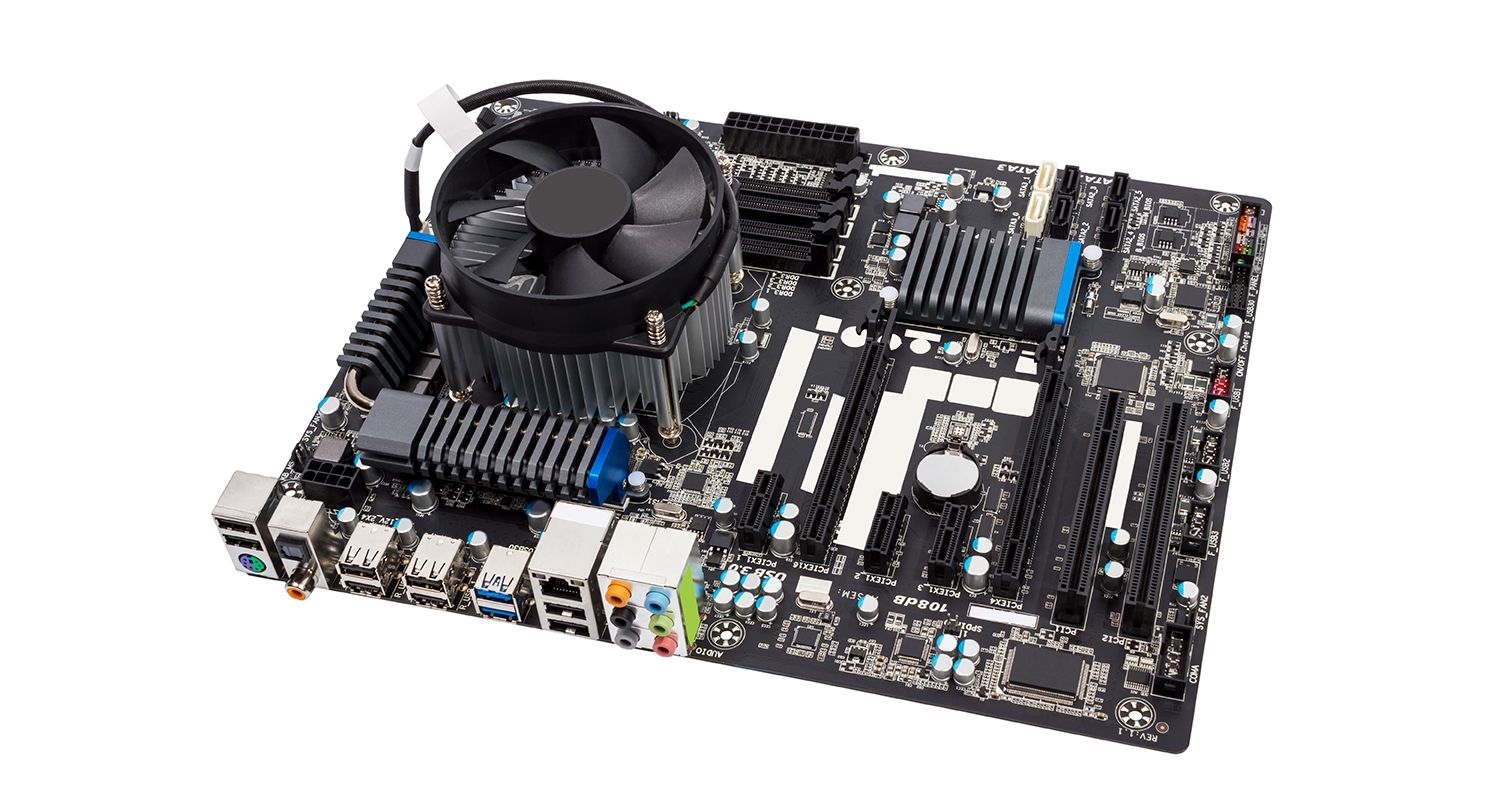
A Guide to Understanding Computer Processors
Explore the essentials of computer processors, their types, and key features to make informed decisions for your computing needs.
What is a Computer Processor?
A computer processor, often referred to as the central processing unit (CPU), is the brain of your computer. It carries out instructions from programs by performing basic arithmetic, logical, control, and input/output operations specified by the instructions. The CPU's speed and efficiency significantly affect your computer's overall performance. Processors are composed of millions of tiny components known as transistors, which switch on and off to process data. Understanding how processors work and their role in computing can help you make more informed decisions when purchasing or upgrading your computer system.
Key Components of a Processor
A CPU consists of several critical components, each playing a unique role in processing data. The Arithmetic Logic Unit (ALU) performs arithmetic and logical operations, while the Control Unit (CU) directs the operation of the processor. Another essential part is the cache memory, a small-sized type of volatile computer memory that provides high-speed data access to the processor. Modern processors also include multiple cores, which allow them to perform multiple tasks simultaneously, improving multitasking and overall performance.
Understanding Clock Speed
Clock speed is one of the most commonly referenced specifications when discussing processors. Measured in gigahertz (GHz), it indicates how many cycles a CPU can perform per second. A higher clock speed means the processor can execute instructions faster, leading to better performance. However, clock speed is not the sole determinant of a processor's efficiency. Other factors, such as the number of cores, architecture, and thermal design power, also play crucial roles. Thus, while a high clock speed can be beneficial, it should be considered alongside other specifications.
The Role of Cores in Modern Processors
Modern CPUs often come with multiple cores, essentially individual processing units within the processor. Each core can handle its own tasks, allowing for more efficient multitasking and improved performance in multi-threaded applications. Dual-core, quad-core, and even octa-core processors are common, with some high-end models featuring even more cores. More cores can significantly boost performance, especially in demanding applications like video editing, 3D rendering, and gaming. However, not all software is optimized to utilize multiple cores effectively, so the benefits may vary depending on the use case.
Hyper-Threading and Multithreading
Hyper-Threading is a technology developed to improve parallelization of computations. It allows a single core to handle two threads simultaneously, effectively doubling the number of tasks a CPU can manage at once. This technology can significantly boost performance in multi-threaded applications. However, it's important to note that hyper-threading does not double the performance since the threads still share the core's resources. Multithreading, on the other hand, refers to a CPU's ability to execute multiple threads concurrently, which is facilitated by having multiple cores or hyper-threading capabilities.
Integrated Graphics vs. Dedicated Graphics
Some processors come with integrated graphics, meaning the GPU (Graphics Processing Unit) is built into the CPU. Integrated graphics are sufficient for everyday tasks like web browsing, office applications, and streaming videos. However, for more demanding tasks like gaming, video editing, and 3D rendering, a dedicated graphics card is often necessary. Dedicated GPUs have their own memory and processing power, providing significantly better performance. When choosing a processor, consider whether integrated graphics will meet your needs or if you will require a dedicated GPU.
Future Trends in Processor Development
The field of processor development is continually evolving, with manufacturers constantly pushing the boundaries of performance and efficiency. Advancements in semiconductor technology, such as smaller nanometer processes, allow for more transistors on a chip, enhancing performance and energy efficiency. Artificial intelligence (AI) and machine learning capabilities are also being integrated into modern processors, enabling more intelligent and adaptive computing experiences. As technology advances, we can expect processors to become even more powerful, efficient, and versatile, catering to an ever-expanding range of applications and user needs.